Amos P. Needham —
The Second Signature
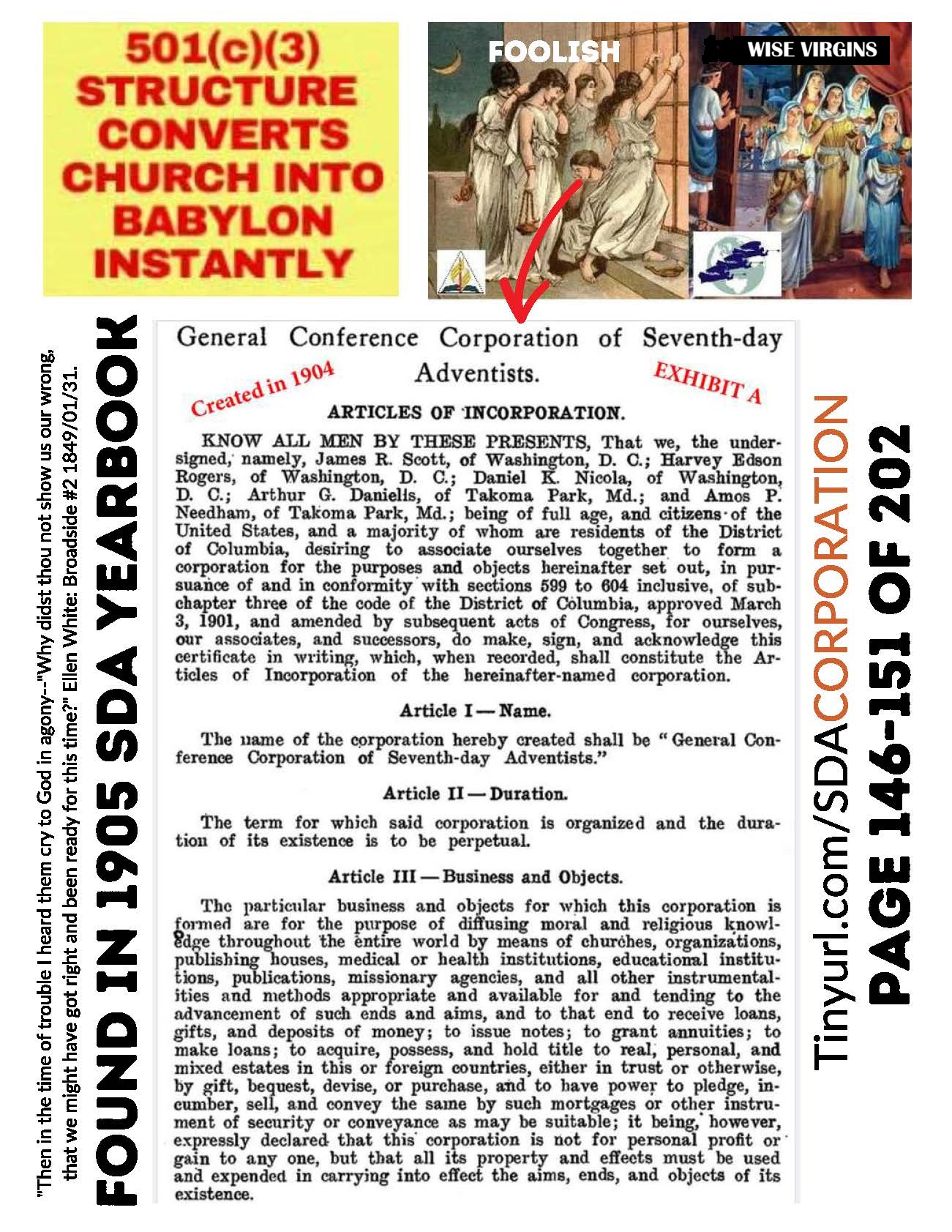
Amos P. Needham was a General Conference officer stationed in Takoma Park, Maryland — the newly established GC headquarters — when Arthur G. Daniells organized the April 15, 1904 incorporation. His name appears second among the Takoma Park signatories. He was not coerced. He was not ignorant. The Spirit of Prophecy had spoken. He lent his signature to the act of apostasy anyway, making him spiritually and institutionally complicit in everything the 1904 corporation would go on to do in the name of "Seventh-day Adventist."
What Amos P. Needham Did
Needham signed the Articles of Incorporation for the “General Conference Corporation of Seventh-day Adventists” in the District of Columbia on April 15, 1904. As a GC officer at the newly relocated Takoma Park headquarters, he was not a passive observer — he was an active institutional participant in the creation of a new civil-religious organization.
His signature as the second Takoma Park signer gave the document legal weight as a multi-party voluntary agreement. Under civil law, multiple signatories confirm that the act was collective and deliberate — not an individual aberration. Needham's signature says: we agreed. We chose this.
What He Had Already Been Told
The warnings were not given to the GC President alone. They were circulated among GC leadership. Needham, as an officer of the General Conference, had access to the Spirit of Prophecy testimony that directly addressed the formation of a new civil-religious organization.
“We cannot now enter into any new organization, for this would mean apostasy from the truth.”— Ellen G. White, 1SM 204 (Letter 242, October 1903)
What "I was just following orders" does not excuse
“Are we hoping to see the whole church at once thoroughly reformed? We may wish to see it, we may pray for it, yet this is not our work. The work is to be done in the heart of each individual.”
— Ellen G. White, Testimonies to Ministers, p. 422 — Individual accountability before God cannot be transferred to an institution or a president.“The first step of apostasy is to get up a creed… the fifth is to commence persecution against such.”— John N. Loughborough, Review & Herald, October 8, 1861 — Needham walked step three and four when he signed on April 15, 1904.
The Charges Against Amos P. Needham
- IComplicity in the 1904 apostasy. Needham's signature gave the act its collective character. His role as GC officer made him a co-principal in the creation of the corporate church-state structure, not merely a witness.
- IIInstitutional enabling. By lending his authority as an officer to the incorporation, Needham gave credibility to the action before the membership and the law. He was the second legitimizing voice in an act that required at least three signatories to complete its legal form.
- IIIRejection of the Spirit of Prophecy testimony. Whether Needham personally read Letter 242 or received it through the officers' channels, the testimony was circulating at GC headquarters in October 1903. He chose the corporation over the counsel of the prophetic gift.
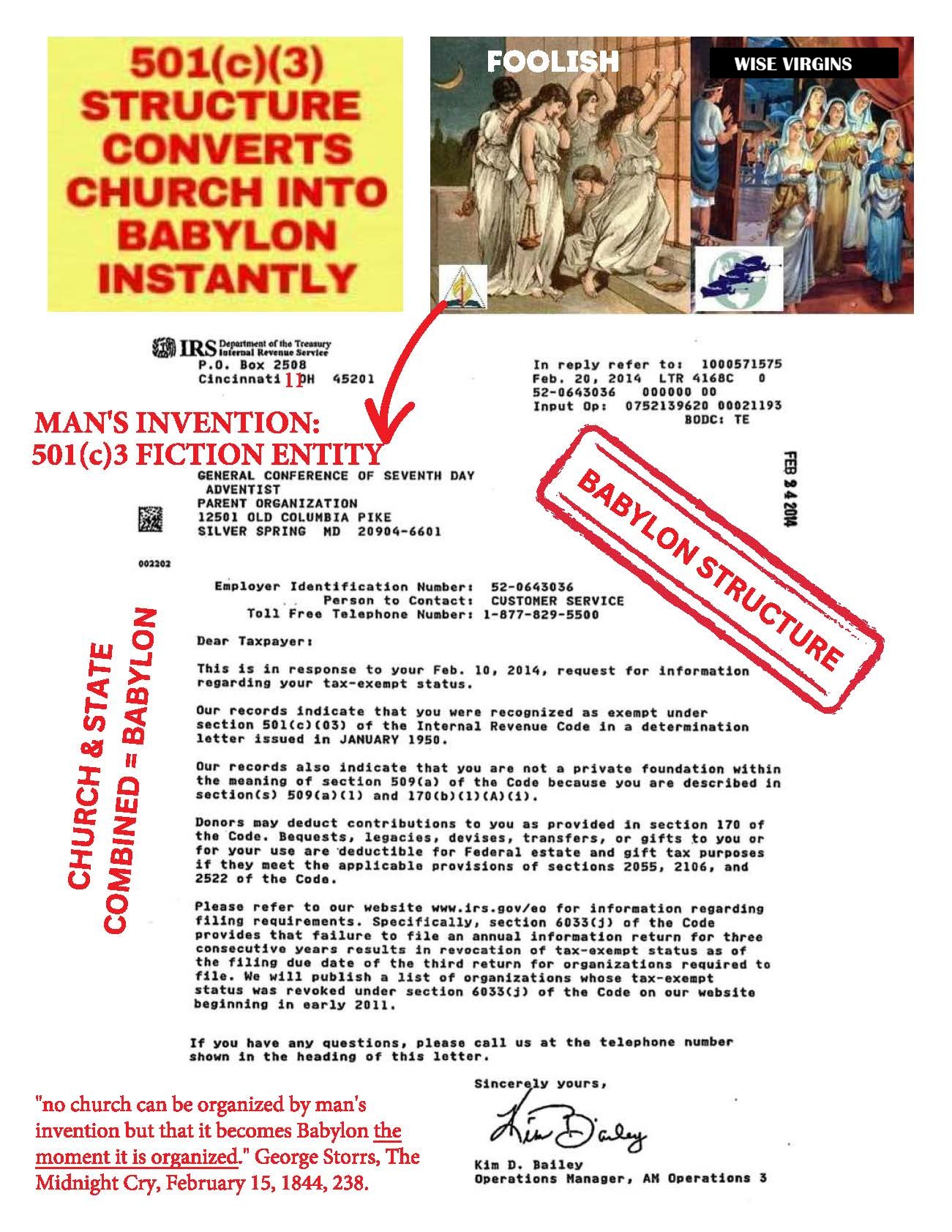
- IVContributing to Idem Sonans name theft. His signature helped to legally establish the entity — "General Conference Corporation of Seventh-day Adventists" — that would later claim exclusive ownership of the pioneer name "Seventh-day Adventist," using the Idem Sonans principle of name identity to seize the pioneer movement's legacy.
- VVoluntary surrender of First Amendment liberty. A GC officer serving a free movement, Needham chose to bring that movement under civil jurisdiction — placing the church under the authority of Caesar's courts in the District of Columbia, contrary to the entire spirit of the Advent movement's origin as a protest against civil-religious coercion.
“Congress shall make no law respecting an establishment of religion, or prohibiting the free exercise thereof…”— First Amendment, U.S. Constitution
The First Amendment granted exactly the freedom the Advent pioneers needed — free assembly, free worship, free preaching of the Three Angels' Messages, with no government oversight. Needham and the four signers voluntarily surrendered that protection by incorporating under D.C. law. Official source: constitution.congress.gov →
The Name He Helped Steal
The name "Seventh-day Adventist" was chosen freely at Buck's Bridge, New York, in 1860 — a spiritual identity belonging to every believer who held the Three Angels' Messages. The 1904 corporation co-opted that name by attaching it to a civil legal entity:
Idem Sonans — "Sounding the Same"
Original — 1860 (Free)
"Seventh-day Adventist"
Buck's Bridge, NY, September 1860
No government. No registration.
Belongs to all believers.
Corporate — 1904 (State-Owned)
"General Conference Corporation
of Seventh-day Adventists"
D.C., April 15, 1904
State-registered. EIN #52-0643036.
501(c)(3) IRS dependency.
The legal doctrine of Idem Sonans holds that two names which sound substantially the same refer to the same identity. Needham's signature helped create the entity that would later use this principle — and civil trademark law — to claim exclusive ownership of the pioneer name, excluding and persecuting those who held the original faith.