The Autobiography of
Elder Joseph Bates
From cabin boy at sea to master mariner commanding his own vessels — from prisoner of the British navy to radical abolitionist who refused to eat slave-produced sugar — from temperance crusader who poured his last rum into the sea to the man who spent his last dollar printing the Sabbath tract that converted James and Ellen White. Captain Joseph Bates’ 1868 autobiography is one of the most extraordinary testimonies of grace in Christian history. In his own words, he tells how God led him from the quarterdeck to the reformation that would shake the world.
“And they overcame him by the blood of the Lamb, and by the word of their testimony; and they loved not their lives unto the death.”— The testimony of the overcomers — those who stood firm through the great final conflict
The Autobiography of Elder Joseph Bates (1868)
Read the complete autobiography below. Download for printing, sharing, or offline study. The sea captain tells his own story.
All Captain Joseph Bates Writings
The complete collection of Captain Bates’ treatises, tracts, and autobiography available in this library — from the first Sabbath tract of 1846 to his life’s testimony in 1868.
The Autobiography of Elder Joseph Bates
The sea captain tells his own story — from cabin boy to co-founder of the Adventist Sabbath reformation. One of the most compelling conversion narratives in Christian history. His own voice. His own testimony.
Read PDFA Seal of the Living God
The foundational treatise identifying the Seventh-day Sabbath as the seal of Revelation 7 and the sealing sign of the 144,000 before the four winds are loosed.
Featured PageThe Seventh-Day Sabbath, A Perpetual Sign
Bates’ first major Sabbath tract — the opening salvo of the Seventh-day Adventist Sabbath reformation. This tract brought James and Ellen White to the Sabbath truth.
Read PDFA Vindication of the Seventh-Day Sabbath
Bates defends the Seventh-day Sabbath against objections, answering the theological arguments used to justify Sunday observance.
Read PDFThe Seventh-Day Sabbath, A Perpetual Sign (63 pp.)
The enlarged 1847 edition — expanded with additional arguments, fuller Scripture analysis, and responses to objections raised after the first printing.
Read PDFThe Opening Heavens
Bates on the open door of Revelation 3 and 4 — the heavenly sanctuary revealed after October 22, 1844. The ark seen. The Sabbath restored.
Read PDFSecond Advent Way Marks and High Heaps
The prophetic signposts of the Advent movement — the way marks and high heaps that confirmed God was leading through the Great Disappointment of 1844.
Read PDFThe Typical & Anti-typical Sanctuary
Bates explains the typological significance of the sanctuary — the key that unlocked the meaning of October 22, 1844 after the Great Disappointment.
Read PDFWho Was Captain Joseph Bates?
From the quarterdeck of a sailing ship to the founding of the original, unincorporated Seventh-day Adventist platform of truth — a life utterly surrendered to God, written in his own hand.
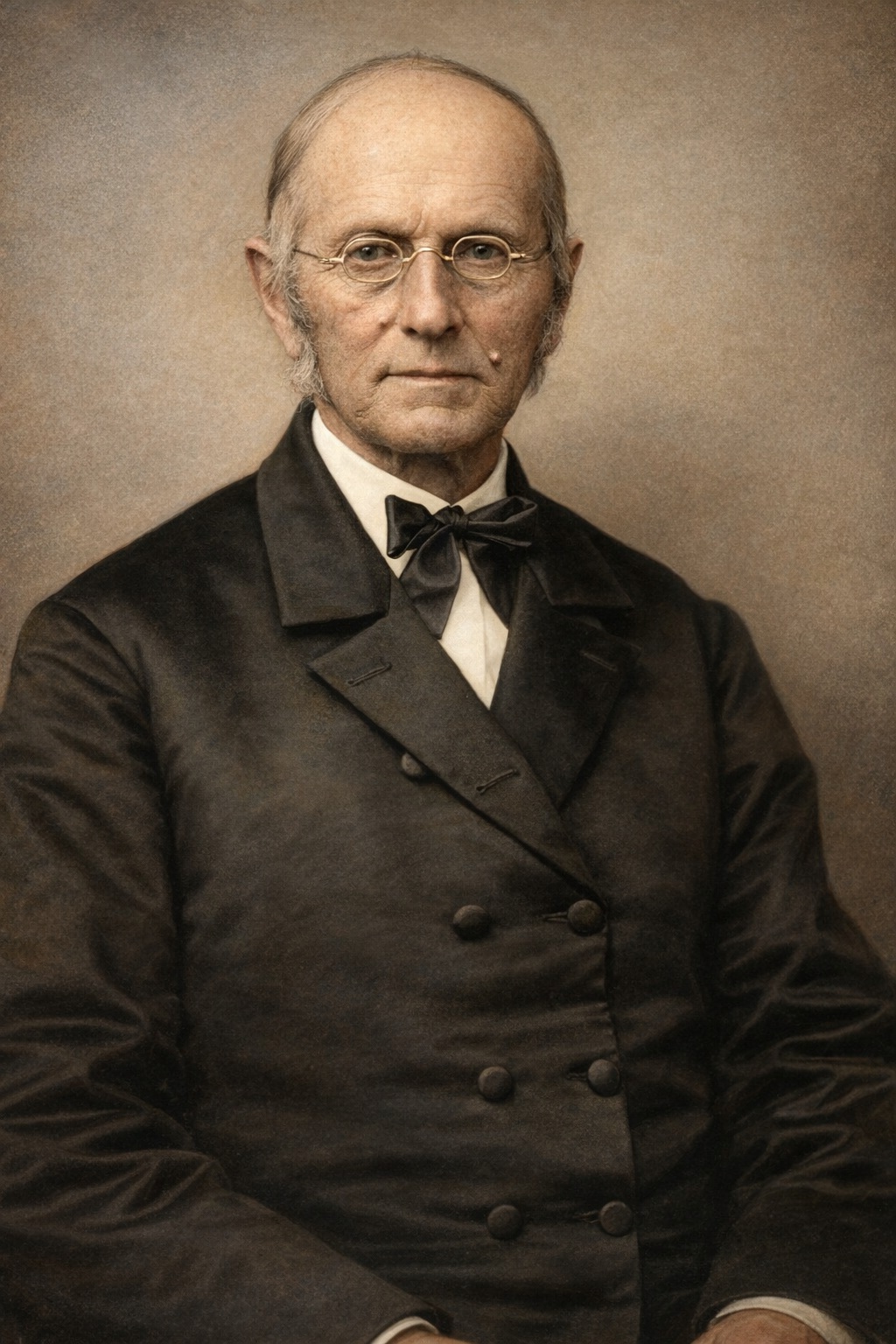
Captain Joseph Bates (1792–1872) — Co-founder of the original Seventh-day Adventist platform of truth (1841–1860) — not the “new organization” state church incorporated April 15, 1904
The Sea Captain Who Spent His Last Dollar on the Sabbath
Joseph Bates commanded ocean voyages before he ever commanded a congregation. Born in Rochester, Massachusetts in 1792, he went to sea at age 15 as a cabin boy. Two decades of seafaring followed — including imprisonment by the British during the War of 1812 — before he earned his master’s papers and commanded his own vessels, sailing as far as England, the Mediterranean, and South America.
His conversion was total. He gave up rum, tobacco, tea, coffee, and finally even meat. He refused to eat sugar produced by slave labor. A committed abolitionist, he helped organize anti-slavery societies decades before the Civil War. He gave away his accumulated savings — nearly his entire fortune — to tract societies and mission work, until he had almost nothing left.
Then, in 1846, he published his first Sabbath tract — spending the last of his money to print it. He sent a copy to James and Ellen White. The result? The Whites accepted the Seventh-day Sabbath, and the three of them became the founding trio who established the original, living platform of Seventh-day Adventist truth. The foundation laid between 1841 and 1860. The one that Bates helped build — which is not the “new organization” (1SM 204) incorporated as the General Conference Corporation of Seventh-day Adventists on April 15, 1904 in the District of Columbia.
In 1868, at age 75, Bates sat down and wrote the story of his life. The autobiography covers his seafaring career, his captivity during the War of 1812, his reformation, his discovery of the Sabbath and sanctuary truths, and his role in the founding of the Advent movement. It is a treasure of Adventist history — and one of the most remarkable testimonies of what God can do with a man who surrenders everything.
“For young people, the Life of Joseph Bates is a treasure.”— Ellen G. White, Review and Herald, December 11, 1879
Ellen White specifically recommended Bates’ autobiography to young people. His testimony of radical reformation — giving up every worldly comfort, every habit, every dollar — in pursuit of a clearer walk with God was the pattern she wanted the next generation to follow. Not the pattern of the 1904 state church.
A Life Transformed by the Word of God
Captain Bates’ autobiography is not merely a history — it is a living argument that the God of heaven meets men exactly as they are, leads them step by step, and requires total consecration before total light.
The Autobiography as Prophetic Document
“And they overcame him by the blood of the Lamb, and by the word of their testimony; and they loved not their lives unto the death.”— Revelation 12:11 (KJV) — The overcomers’ weapon: their testimony
“Remember the sabbath day, to keep it holy … the seventh day is the sabbath of the LORD thy God … For in six days the LORD made heaven and earth, the sea, and all that in them is, and rested the seventh day: wherefore the LORD blessed the sabbath day, and hallowed it.”— Exodus 20:8–11 (KJV) — The commandment Bates spent his last dollar defending
Joseph Bates was not a polished theologian. He was a sea captain — a man accustomed to navigating by fixed stars and obeying fixed laws. When he read the Bible with the same precision he had applied to navigation charts, he could not escape the fourth commandment. He could not find Sunday in Scripture. He found only Saturday — the seventh day — blessed and hallowed by God Himself at the creation of the world.
What makes the autobiography so powerful is the sequence. Bates did not arrive at Sabbath truth by accident. He was systematically stripped of every worldly comfort — alcohol, tobacco, tea, coffee, meat, money, social standing — before God opened the Sabbath light to him. The autobiography shows that total reformation preceded total revelation. The pattern God used with Bates is the same pattern He uses today.
Captain Bates Before Reformation
- Sea captain accumulating wealth
- Drank rum and used tobacco like all sailors
- Observed Sunday like all Protestants
- Knew nothing of the Seventh-day Sabbath
- Knew nothing of the heavenly sanctuary
- Had money, status, and security
Captain Bates After Total Surrender
- Gave entire fortune to mission work
- Total abstainer from all stimulants
- Kept the Seventh-day Sabbath without compromise
- Published the sealing truth of Revelation 7
- Converted James and Ellen White to the Sabbath
- Co-founder of the living Adventist platform of truth
“We cannot now enter into any new organization, for this would mean apostasy from the truth.”
— Ellen G. White, 1SM 204 (Letter 242, October 1903) — Six months before the April 15, 1904 incorporation
The original Seventh-day Adventist platform of truth, established 1841–1860. Unregistered. Unincorporated. Belonging to all who keep the Commandments of God and the Faith of Jesus (Rev. 14:12). Bates died in 1872 — eight years before the General Conference was formally organized, and 32 years before the 1904 state church was incorporated.
Incorporated as the General Conference Corporation of Seventh-day Adventists in the District of Columbia — New Rome — now operating as the General Conference of Seventh-day Adventists. A civil entity under Caesar’s law. Built 32 years after Bates died. Not his church.
“There is another universal and truly Catholic organization, the Seventh-day Adventist Church.”— Neal C. Wilson, General Conference President — Adventist Review, March 5, 1981, p. 3
The church Joseph Bates co-founded warned against Rome for 40 years. The 1904 state church has now confessed itself “truly Catholic.” Bates spent his last dollar to print the truth that Rome has always suppressed — the Seventh-day Sabbath, the seal of God. The contrast could not be starker.
“Flee from the Laodicean churches like Lot from Sodom! Their teachings lead to destruction — DEATH! DEATH!! eternal DEATH!!! is on their track.”— Joseph Bates, 1850
More Featured Books from the Pioneer Library
Every featured book on SundayLaw.com — each a foundational document of the original Advent truth. Reading Bates’ autobiography is the beginning, not the end.
Come Out of Her, My People
The Second Angel’s message — Babylon is fallen. The sermon that launched the great exodus from the Protestant churches.
A Seal of the Living God
The Seventh-day Sabbath as the seal of Revelation 7. The foundational document of Adventist seal theology.
History of the Sabbath and First Day of the Week
The definitive historical and scriptural defense of the Seventh-day Sabbath. The most thorough Sabbatarian treatise ever published.
Brother Miller’s Dream
Miller’s vision of the diamonds and the chest — the prophetic parable of the Adventist message scattered and gathered.
The Three Angels’ Messages
The everlasting gospel, the fall of Babylon, and the final warning against the mark of the beast — the complete three-part message.
All Featured Pioneer Books
Browse every featured book, tract, and document in the Pioneer Library — the complete collection of original Adventist truth.