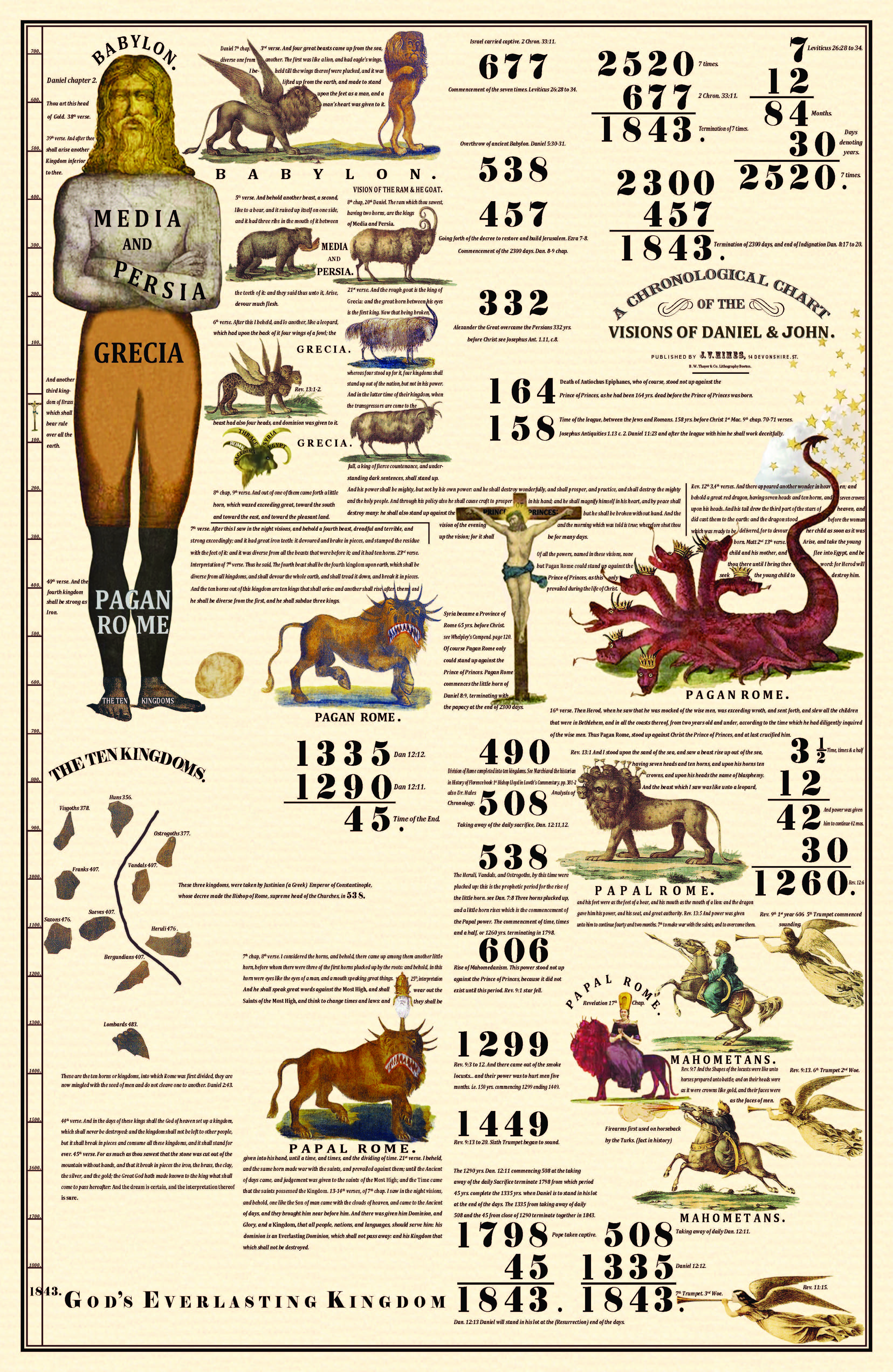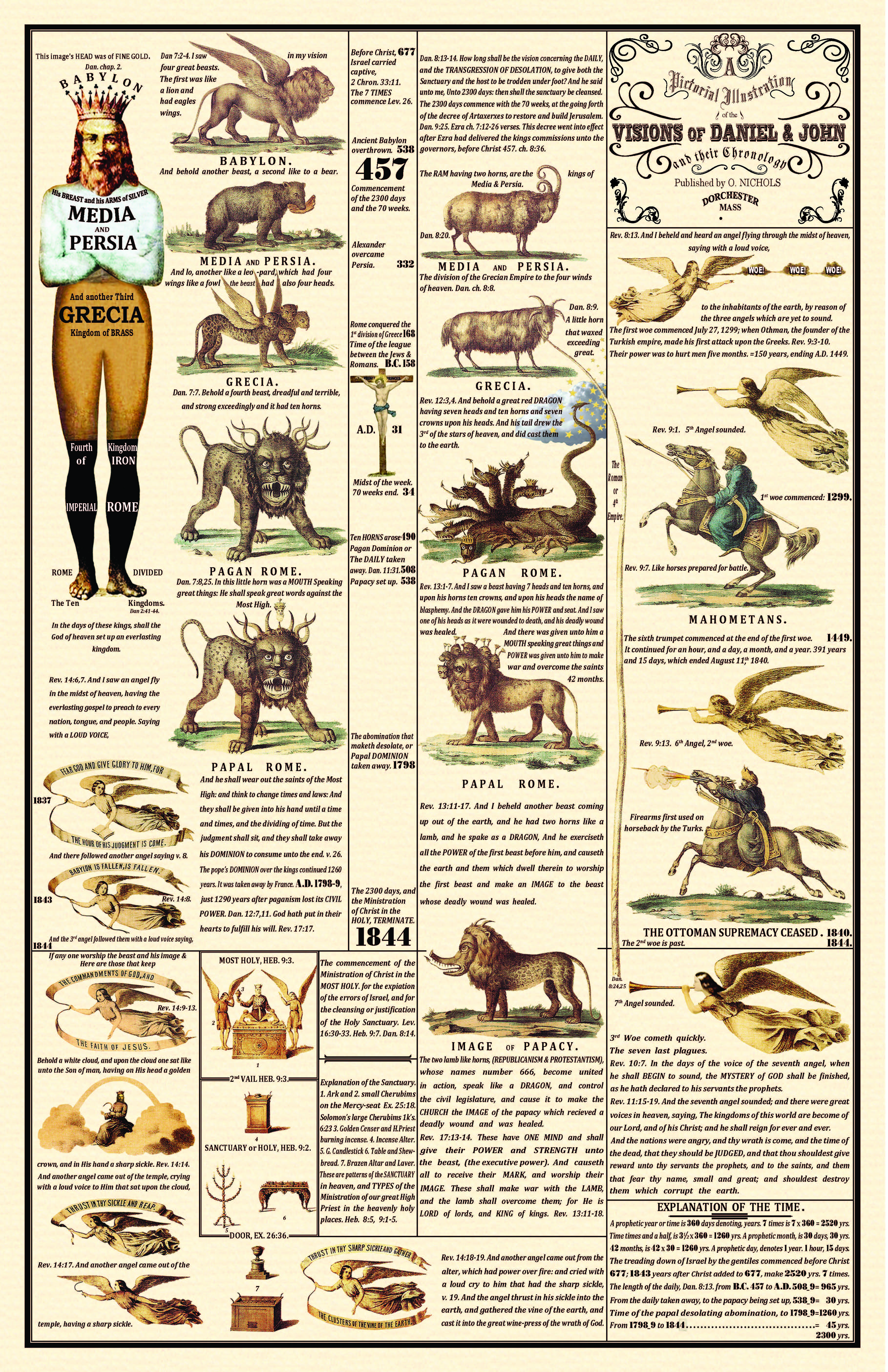
Produced after the Great Disappointment of October 22, 1844 — this chart presented the full light of the pioneers: the heavenly sanctuary, the seventh-day Sabbath, the Three Angels' Messages, the Seal of God, and the Mark of the Beast. The prophetic platform of the Seventh-day Adventist movement.
October 22, 1844 came and went. The movement was scattered. But the light was not extinguished — it was clarified. The pioneers searched the Scriptures and were led into deeper truth.
"It was not the will of God that the coming of Christ should be thus delayed, and that His people should not be prepared to receive Him. Not then did the world receive the warning to prepare for that day. The disappointment of those who believed in the soon coming of Christ was indeed bitter to those who had expected to see their Lord."
— Ellen G. White, The Great ControversyJoseph Bates had proclaimed the seventh-day Sabbath since 1846. By 1849–1850, James and Ellen White joined Bates. The scattered remnant began keeping the Sabbath and studying the sealing message of Revelation 7. The 1850 chart was the visual platform of this new truth.
On the morning after October 22, 1844, Hiram Edson walked through a cornfield in tears. There the light broke upon him: the sanctuary to be cleansed was not on earth but in heaven. Christ had entered the Most Holy Place — not to come to earth, but to begin the investigative judgment. This was the key that unlocked the 1850 chart.
Read Hiram Edson's biography →Otis Nichols was the devoted Adventist who hosted Ellen White in her early years of ministry. His home in Dorchester, Massachusetts was a center of the early Advent movement. He played a key role in producing and distributing the prophetic charts and supported the pioneers' publishing work.
Read Otis Nichols' biography →The 1850 chart expanded and corrected the 1843 chart — presenting the complete prophetic platform of the Sabbatarian Adventist pioneers.
"I was shown that the 1843 chart was directed by the hand of the Lord, and that it should not be altered; that the figures were as He wanted them; that His hand was over and hid a mistake in some of the figures, and that it would not be seen until His hand was removed. Then I was shown that the 1850 chart was directed by His hand, and that the figures were correct."
— Ellen G. White, Early Writings, p. 74 (1851)Click to open in the full-size lightbox. Download the PDF for print quality.
Embedded PDF viewer — scroll and study directly in your browser.
The centerpiece of the 1850 chart — the three-fold warning of Revelation 14 — is still God's last message to the world.
"Fear God, and give glory to him; for the hour of his judgment is come: and worship him that made heaven, and earth, and the sea, and the fountains of waters."
— Revelation 14:7 (KJV)"Babylon is fallen, is fallen, that great city, because she made all nations drink of the wine of the wrath of her fornication."
— Revelation 14:8 (KJV)"If any man worship the beast and his image, and receive his mark in his forehead, or in his hand, the same shall drink of the wine of the wrath of God..."
— Revelation 14:9–10 (KJV)"Here is the patience of the saints: here are they that keep the commandments of God, and the faith of Jesus."
— Revelation 14:12 (KJV) — The conclusion the chart points to · The Remnant of RevelationThe 1850 chart builds on the 1843 chart. Both were used in the great Advent awakening and are confirmed by the Spirit of Prophecy.
"I was shown that the charts were correct... the figures were as He wanted them; that His hand was over and hid a mistake in some of the figures, and that it would not be seen until His hand was removed."
— Ellen G. White, Early Writings, p. 74Press Esc to close · / or Ctrl+K to open