Early Life and Calling
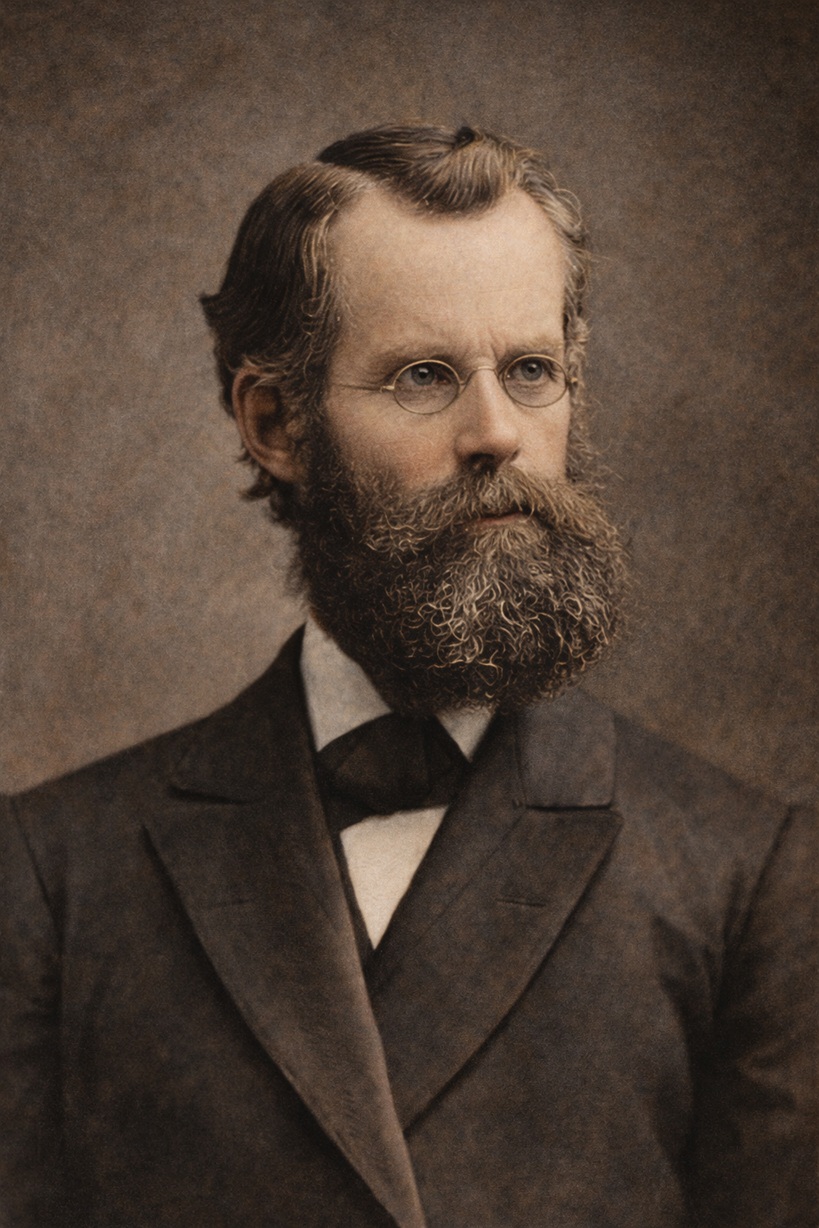
John Nevins Andrews was born in Poland, Maine, in 1829. He joined the Millerite revival in 1843 and began observing the seventh-day Sabbath in 1845. In 1849 he connected with James and Ellen White, and soon entered full-time ministry among early Sabbatarian Adventists.
By 1853 he was ordained and recognized as one of the movement's strongest biblical scholars. His writing and preaching helped shape early Adventist theology, especially on prophecy and Sabbath doctrine.
Scholar and Church Leader
In the 1850s and 1860s Andrews traveled widely in evangelistic work and helped build conference structure in the northeastern United States. He also wrote History of the Sabbath and First Day of the Week, a major early Adventist work.
He served as General Conference president from 1867 to 1869 and later as editor of the Review and Herald. During this period he became known for careful argumentation, language skill, and doctrinal depth.
First Official Overseas Missionary
After the death of his wife Angeline in 1872, Andrews accepted appointment to Europe. In 1874 he and his children Charles and Mary traveled to Switzerland, becoming the first official overseas missionaries sent by the Seventh-day Adventist Church.
In Europe he helped organize publishing work, launched French-language outreach, and supported the periodical Les Signes des Temps. His service proved that Adventist mission could move beyond North America in a sustained way.
Final Years and Legacy
Andrews continued missionary labor in Europe while carrying significant personal losses, including the death of his daughter Mary. He died in Basel, Switzerland, on October 21, 1883.
His legacy is lasting: global mission strategy, theological writing, and an example of disciplined scholarship in service to the church. Andrews University later took his name in recognition of his influence.
Sources
Primary chronology and bibliographic direction in this profile are based on the Wikipedia article on J. N. Andrews and linked historical references: https://en.wikipedia.org/wiki/J._N._Andrews
Contemporary Recognition
Contemporary Adventist historians emphasize Andrews' foundational role. His 1874 voyage is celebrated as marking Adventism's transition from provincial to global movement. His love for souls and commitment to truth transcended boundaries and remains an inspiration to modern missionaries.